
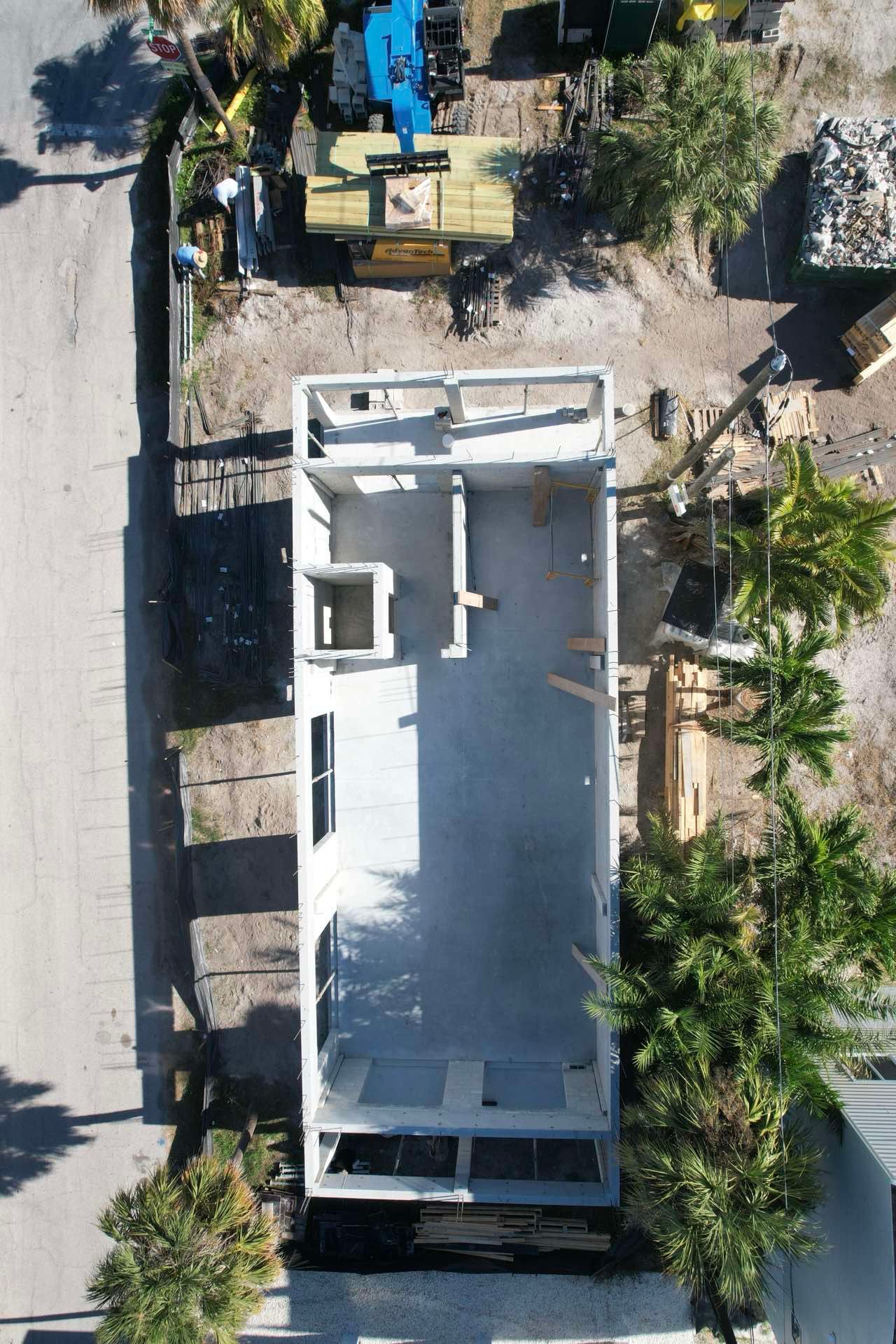
Shell Construction · Compared
Wood Frame vs CMU
vs Hybrid Shell
Three shell types dominate Florida residential construction. Each has a use case where it wins on cost, speed, or storm resilience. Here's how they compare on the eight things builders and developers actually weigh.
Quick answer
For most Florida coastal 2-story custom homes, hybrid (CMU lower + wood upper) is the right choice.
Wood frame wins on cost and speed for inland and multi-family. Pure CMU wins on insurance and resilience for beachfront and single-story. Hybrid is the practical default for the Tampa-Sarasota luxury custom-home market — it gets you most of the masonry benefits at a 8–15% premium over wood, vs the 15–25% premium for full CMU.
Side-by-side comparison
| Factor | Wood Frame | CMU (Block) | Hybrid |
|---|---|---|---|
| Build speed (4,000 sq ft typical) | 4–6 weeks | 8–12 weeks | 7–10 weeks |
| Cost premium vs wood frame | Baseline | +15–25% | +8–15% |
| Wind-load performance (FBC HVHZ) | Code-compliant w/ proper connectors | Excellent | Excellent (lower floor) |
| Insurance impact (FL coastal) | Standard rates | Often 10–25% lower premiums | Partial discount |
| MEP routing flexibility | Easy | Requires conduit/sleeve planning | Easy upper, planned lower |
| Sound attenuation between floors | Standard | Excellent | Excellent floor-to-floor |
| Termite resistance | Requires pressure-treated sill + treatment | Inherent | Lower floor inherent |
| Common Florida use case | Inland custom homes, multi-family | Coastal single-story, beachfront | Most coastal 2-story custom homes |
01 · Wood Frame
Fast, flexible, code-compliant.
Wood-frame construction uses dimensional lumber (typically 2x4 or 2x6 stud walls) with engineered roof trusses. Walls assemble flat on the deck and tilt up — fast, repeatable, and easy to coordinate with MEP trades.
For inland custom homes (beyond the FBC HVHZ wind zones) and multi-family residential up to five stories, wood frame is the default for cost and speed. Properly built with Simpson Strong-Tie hurricane straps and code-compliant nailing schedules, wood-frame shells meet FBC 8th Edition wind-load requirements across most of Hillsborough, Pinellas, Manatee, and Sarasota counties.
02 · CMU (Concrete Masonry Unit)
Storm-tested, insurance-friendly.
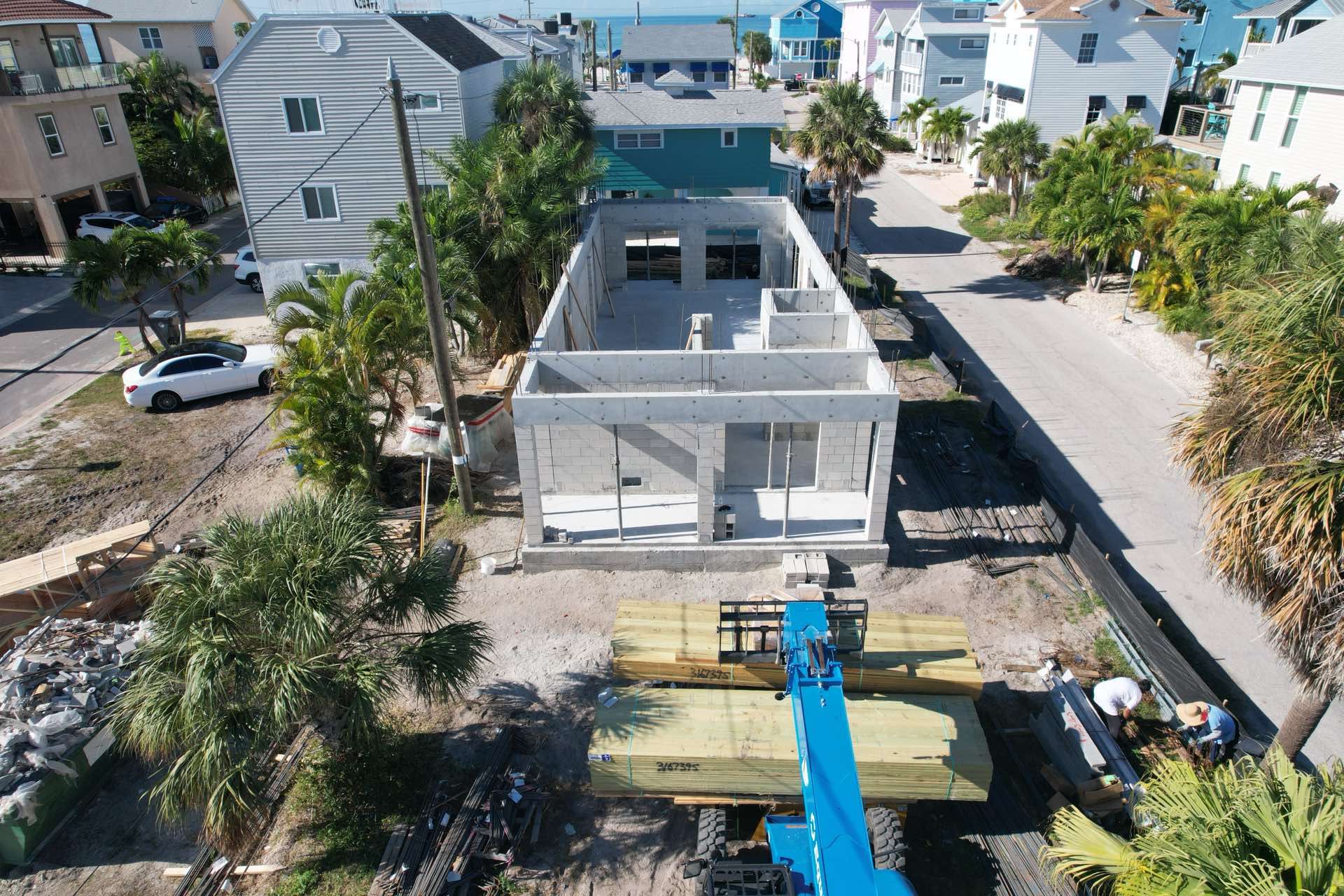
CMU shells use stacked concrete blocks reinforced with rebar and filled with concrete grout at specified cells. The result is a monolithic load-bearing wall system rated for the highest Florida wind loads and inherently resistant to fire, termites, and wind-driven debris.
The trade-off is cost and time. CMU requires skilled mason labor, block delivery and staging, mortar mixing, course-by-course laying, lintel work over every opening, and concrete pumping for cell fills. For coastal beachfront single-story custom homes, CMU is the right call — insurance premium discounts of 10–25% can offset the cost premium over the homeowner's hold period.
03 · Hybrid (CMU + Wood Frame)
The Florida coastal default.
Hybrid construction puts CMU on the first floor and wood frame on the second. You get the storm resilience of masonry where it matters most — at grade, exposed to surge and debris — plus the cost and speed advantages of wood for the upper floor where MEP routing is already complex.
For most 2-story coastal Florida luxury custom homes in our service area, hybrid is what we recommend by default unless the architect, GC, or homeowner has a specific reason to go pure CMU or pure wood. The cost premium over wood frame is modest (8–15%) and the partial insurance discount on the CMU lower floor is real.
Need help deciding?
We'll spec the right shell for your project.
Send us your architectural drawings and we'll come back with a shell-system recommendation, fixed-price quote, and a clear schedule — within 5–7 business days.